Patient Profile
-
Patient: Rafikkul M. Shaikh
-
Gender: Male
-
Procedure: I-FUE Hair Transplant
-
Total Grafts: 2,500 grafts
-
Follow-Up: Approximately 1.7 years
-
Clinic: Hairfree & Hairgrow Hair Transplant Clinic
-
Primary Concern: Hair loss and reduced scalp coverage
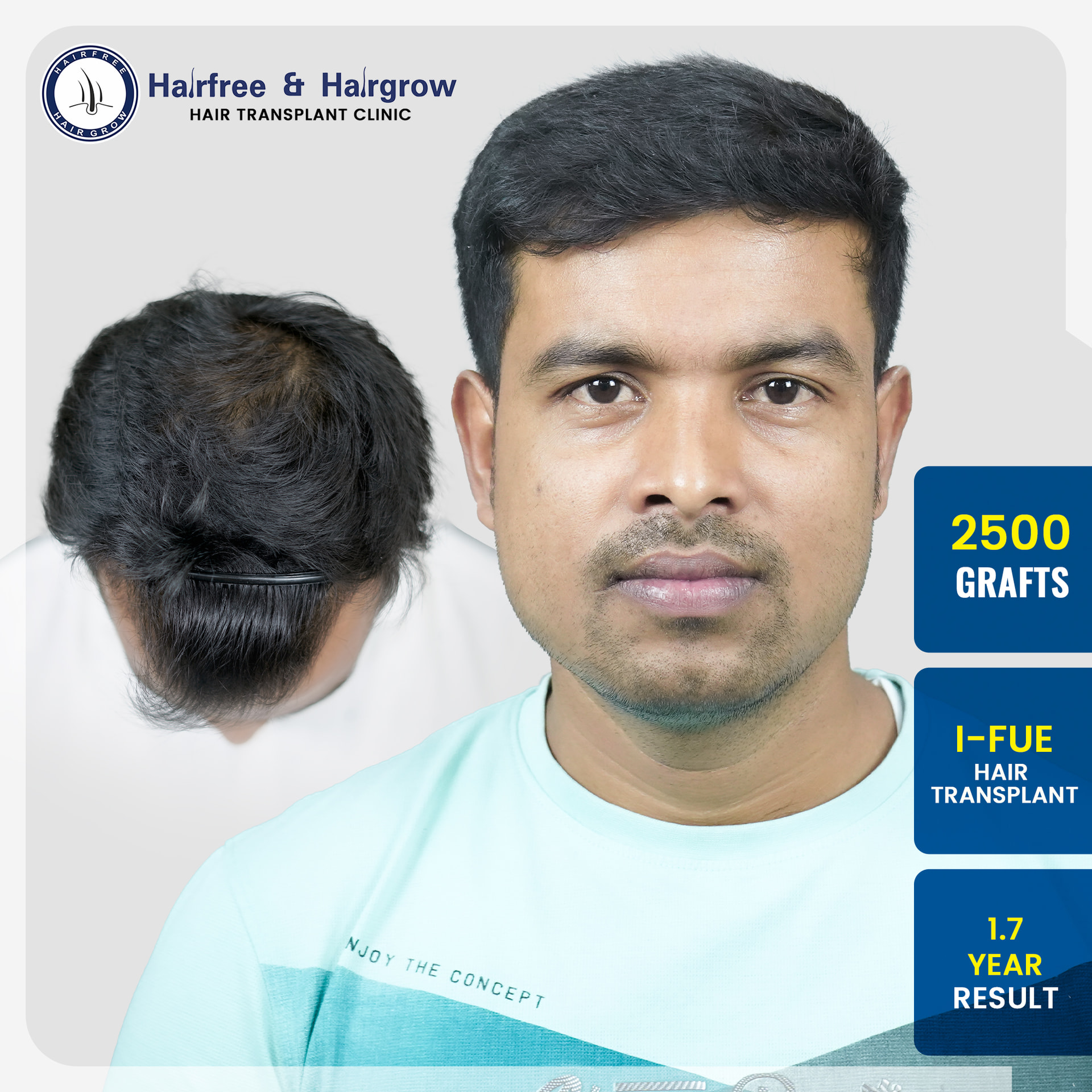
2,500-Graft I-FUE Hair Transplant
Rafikkul M. Shaikh underwent a 2,500-graft I-FUE hair transplant to address visible hair loss and improve the overall appearance of scalp coverage.
The treatment involved the extraction of individual follicular grafts from the donor area and their placement into areas affected by hair loss. Graft placement can be planned according to the patient’s existing hair pattern, recipient-area requirements, hair direction, and available donor hair.
A personalized approach is important in hair transplantation because graft requirements and achievable coverage can vary according to the extent of hair loss, donor density, hair characteristics, and the size of the recipient area.
Hair Loss Concerns
Before treatment, the documented photograph shows areas of visible scalp and reduced hair coverage. The treatment objective was to improve the appearance of density and create a fuller-looking result while making effective use of the available donor hair.
The treatment planning process may consider:
-
Existing hair density
-
Donor-area quality and availability
-
Recipient-area size
-
Hair-loss pattern
-
Hair thickness and graft characteristics
-
Desired coverage
-
Natural hair-growth direction
Treatment Highlights
Rafikkul’s documented hair transplant case included:
-
2,500 follicular grafts
-
I-FUE hair transplant
-
Individualized graft planning
-
Donor-area assessment
-
Recipient-area planning
-
Strategic graft distribution
-
Consideration of natural hair direction
-
Long-term restoration planning
1.7-Year Hair Transplant Result
At approximately 1.7 years after the I-FUE procedure, the documented before-and-after photographs show a noticeable improvement in the overall appearance of hair coverage compared with the pre-treatment image.
The follow-up result shows:
-
Improved visible hair coverage
-
Fuller-looking hair appearance
-
Reduced scalp visibility in treated areas
-
Improved overall scalp coverage
-
A more balanced appearance of the treated region
The final appearance of a hair transplant can vary between patients. Factors such as donor-hair quality, hair caliber, graft characteristics, genetics, healing, native hair, and postoperative care can influence the visible outcome.
What Is an I-FUE Hair Transplant?
I-FUE is a follicular-unit extraction approach in which individual grafts are harvested from the donor area and transplanted into planned recipient areas.
The success and appearance of a hair-transplant result depend on several patient-specific factors, including donor characteristics, recipient-area planning, graft distribution, implantation direction, existing native hair, and aftercare.
Therefore, a qualified hair-transplant professional should determine the appropriate graft count and treatment approach after conducting an individual assessment.
Choosing a Hair Transplant Clinic in India
People searching for the “best hair transplant in India” may compare clinics based on factors such as the treatment approach, doctor and clinical-team experience, donor-area assessment, graft-planning process, consultation quality, and documented before-and-after results.
Rafikkul M. Shaikh’s case represents a documented 2,500-graft I-FUE hair transplant result with a photograph taken approximately 1.7 years after treatment at Hairfree & Hairgrow Hair Transplant Clinic.
A patient’s treatment plan should always be based on individual hair-loss characteristics, donor availability, and realistic coverage goals rather than a fixed number of grafts or a one-size-fits-all approach.
Final Outcome
Rafikkul M. Shaikh’s 2,500-graft I-FUE hair transplant demonstrates visible improvement in hair coverage at the documented 1.7-year follow-up.
This case highlights the importance of personalized assessment, careful graft planning, recipient-area design, strategic graft distribution, and consideration of long-term hair restoration goals.
Disclaimer
This case study represents one documented patient’s result approximately 1.7 years after treatment. Hair-transplant results vary between individuals and are not guaranteed. Factors such as donor-hair availability, hair characteristics, genetics, existing hair loss, treatment planning, healing, and post-operative care may affect the final appearance.