In this hair transplant case study, we share Ravi’s complete journey, including his hair loss condition, treatment plan, procedure details, recovery timeline, and final results after 10 months.

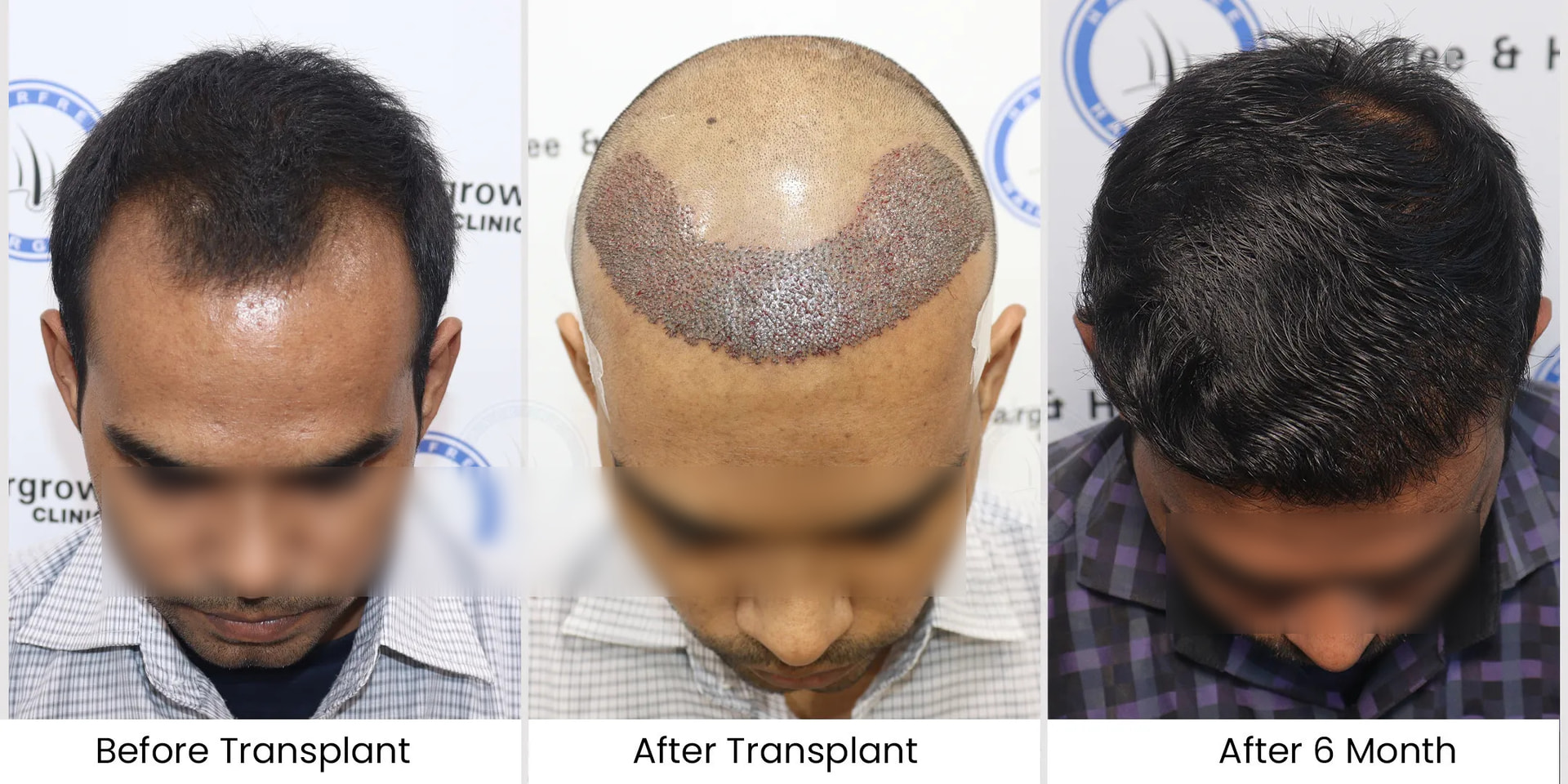
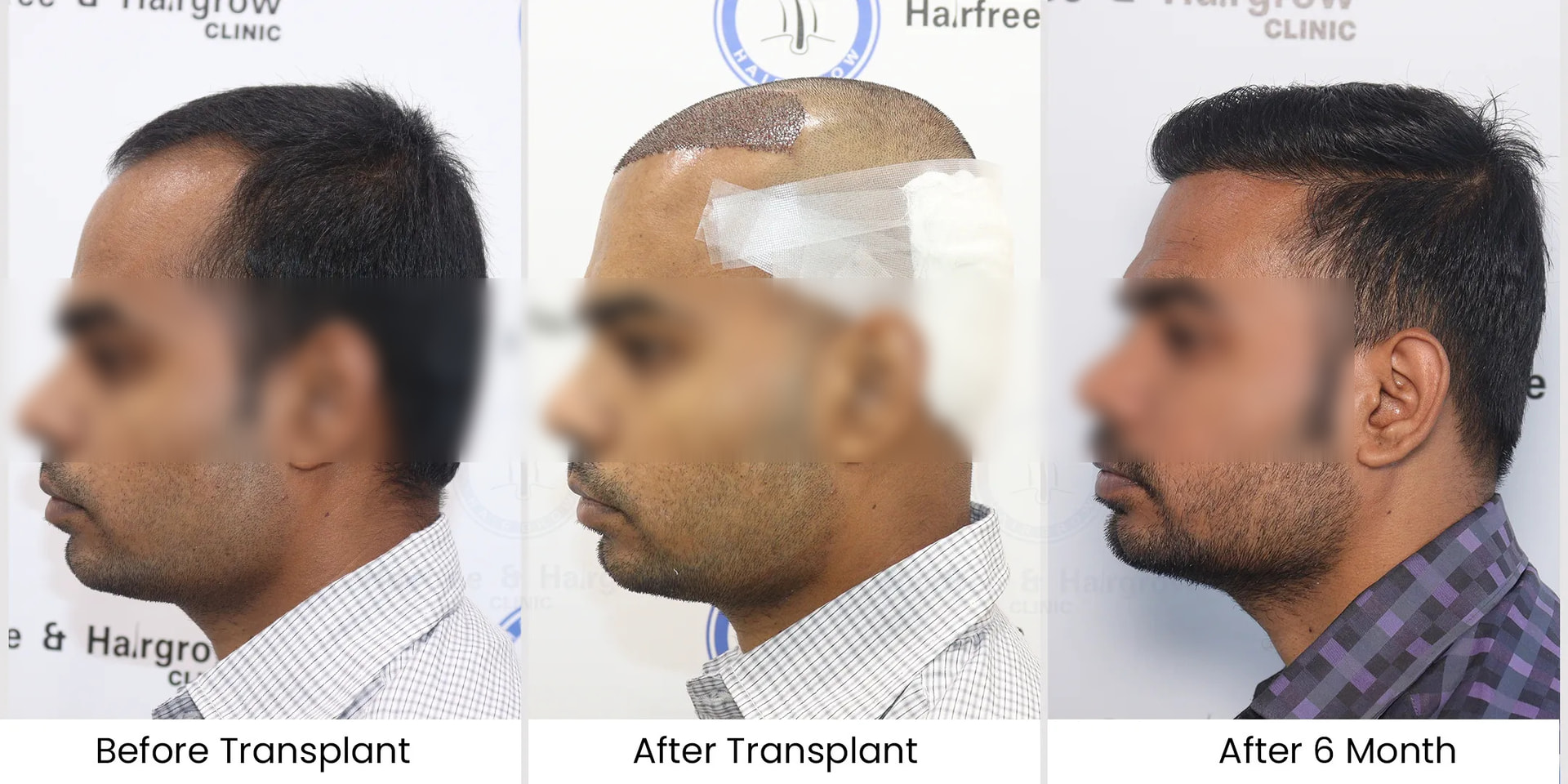
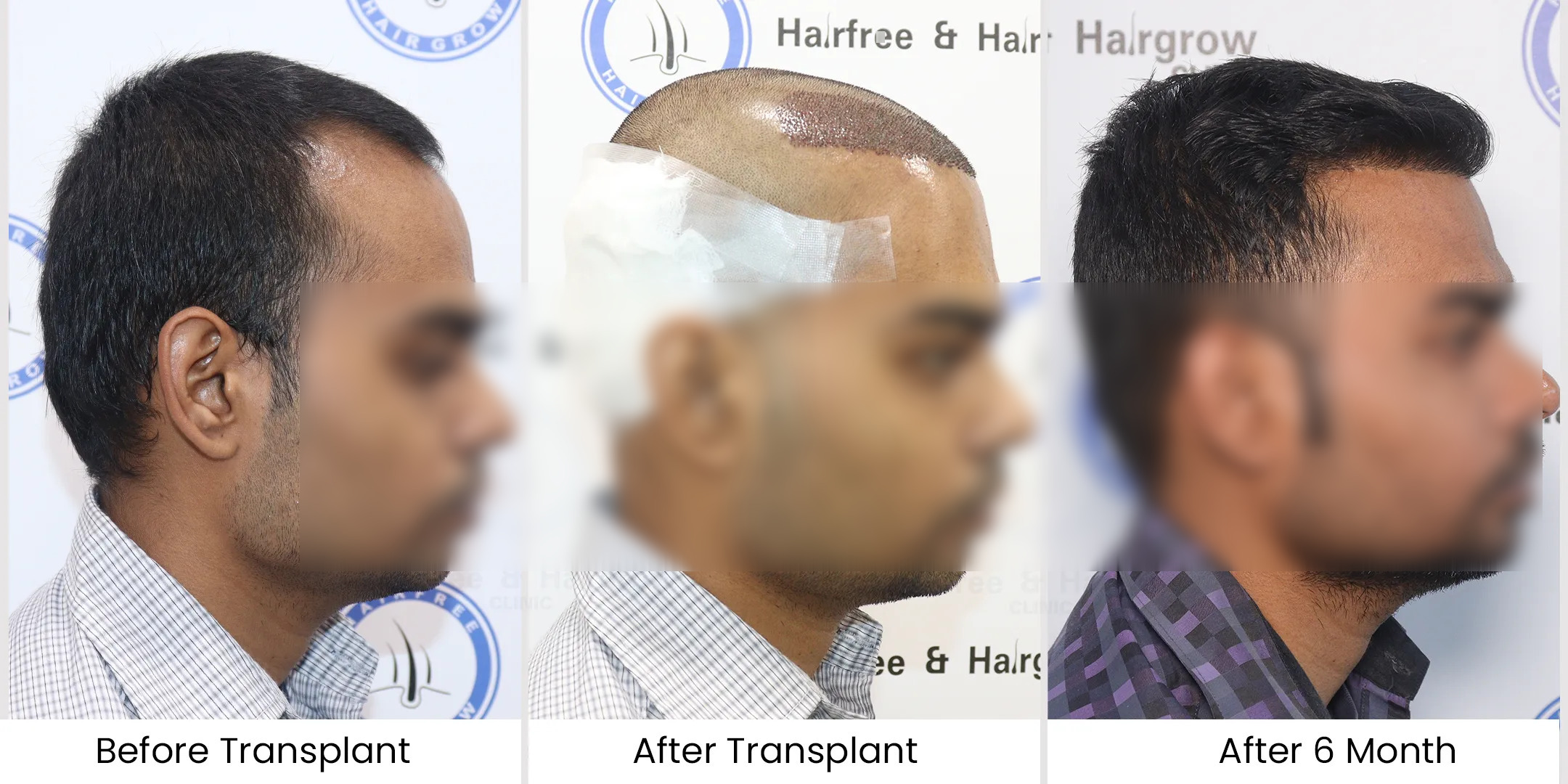
Hair loss can affect confidence, appearance, and even social interactions. Many men begin to notice a receding hairline and thinning hair in their early 30s, especially when there is a family history of baldness. This was the case for Ravi Verma, a 33-year-old man from Rajasthan, India, who struggled with progressive hair loss for several years before choosing a hair transplant.
Patient Profile
- Name: Ravi Verma
- Age: 33 years
- Location: Rajasthan, India
- Hair Loss Duration: 4–5 years
- Visible Baldness Since: 2–3 years
- Family History: Father also had baldness.
Ravi first noticed excessive hair fall around 4 to 5 years ago. Over time, the hairline gradually disappeared, and thinning became more noticeable in the frontal area. By the time he visited the clinic, he had lost most of his front hairline and temple area.
However, the middle scalp still had reasonable density with only mild thinning. His pattern of hair loss was consistent with early male pattern baldness and was mainly influenced by genetics.
Previous Hair Loss Treatments
Before considering surgery, Ravi had already tried several non-surgical hair fall treatments, including:
- Minoxidil
- Multivitamin supplements
- Basic hair growth medications
Initially, these treatments gave him mild improvement and slightly reduced hair fall. However, after some time, the results stopped improving, and his frontal baldness continued to progress.
Since the hairline area had already become significantly thin, medicines alone were no longer enough to restore natural density.
Consultation and Hair Analysis
Ravi visited the Hairfree Hairgrow Clinic at the Surat branch and consulted with Dr. Jinkal Kunjadiya. During the consultation, his scalp condition, hair loss pattern, donor area quality, and overall health were carefully evaluated.
He had no major medical conditions such as
- High blood pressure
- Diabetes
- Asthma
- Any serious illness
He also had:
- No allergy history
- No previous surgeries
- No tendency for keloid formation
This made him a suitable candidate for a hair transplant procedure.
A detailed trichoscopy examination was performed to assess the following:
- Donor area density
- Thickness of hair shafts
- Existing hair in the recipient area
The donor area was found to be average to good in quality. Ravi had thick, straight, black hair, which is considered highly suitable for achieving better density and natural-looking results after transplantation.
Hair Transplant Treatment Plan
After evaluating Ravi’s condition, the doctors recommended a hair transplant focused on rebuilding the frontal hairline and temple area.
Treatment Details
- Procedure Date: 3 June 2021
- Technique Used: DHT Hair Transplant Technique
- Total Grafts Implanted: 2710 Grafts
- Additional Therapy: 3 PRP sessions over 6 months
After the transplant, Ravi was advised to continue:
- DHT blocker medication
- Nutritional supplements
- Minoxidil 5% and 10%
These medicines were prescribed to maintain his existing hair and support the growth of the newly transplanted hair.
Step-by-Step Hair Transplant Procedure
1. Hairline Planning and Design
The first and most important step was designing a natural-looking hairline.
The frontal hairline and temple area were marked according to Ravi’s face shape, age, and expected future hair loss pattern. The design was created to give a balanced and realistic appearance rather than an artificial or overly straight hairline.
Proper planning is essential because a well-designed hairline determines how natural the final result will look.
2. Donor Area Examination and Skin Test
Before starting the procedure, a skin sensitivity test was performed to make sure Ravi was not allergic to the anesthesia.
After confirming there was no allergy, the scalp was prepared for surgery. His head was shaved, and the donor and recipient areas were cleaned thoroughly using antiseptic solutions.
3. Local Anesthesia and Recipient Site Creation
Ravi was then taken to the operation theater, where local anesthesia was administered using a modified block technique with a vibration-based pain control method.
After anesthesia, tiny slits were created in the recipient area using sapphire-tip blades:
- 1.2 mm blade for the hairline
- 1.4 mm blade for the remaining frontal area
These slits are extremely important because they control the following:
- Direction of hair growth
- Angle of the transplanted hair
- Final density and natural appearance
The surgeon carefully created each slit so the transplanted hair would grow in the same direction as Ravi’s natural hair.
4. Graft Extraction
The graft extraction process was carried out using a 0.8 mm sterile titanium punch under magnification.
The extraction took approximately 90 minutes.
A total of 2710 grafts were collected from the donor area.
Graft Analysis
Ravi’s graft quality was excellent because most of the grafts contained multiple hairs.
- 20% single-hair grafts
- 80% double and triple-hair grafts
He also had a good number of triple-root grafts, which helped improve the final density. Since his hair was naturally thick and dark, the overall coverage after the transplant was expected to look fuller.
5. Graft Preservation
After extraction, the grafts were preserved in a special growth-factor solution inside a graft chiller at 4°C.
This process helps protect the grafts and maintain their survival rate before implantation.
6. Implantation of Grafts
In the final stage, the extracted grafts were implanted into the prepared slits using K.E.E.P. implanters of different sizes.
Separate implanters were used for:
- Single-hair grafts
- Double-hair grafts
- Triple-hair grafts
The implantation process took around 2.5 hours.
By placing each graft carefully in the correct position, the surgical team ensured that the final hairline would look natural and dense.
Recovery Timeline After Hair Transplant
First 2 Months: Shedding Phase
During the first two months after the procedure, Ravi experienced the normal shedding phase.
Around 60% of the transplanted hairs fell out gradually. This is a completely expected part of the hair transplant process and does not mean the grafts have failed.
During this period, Ravi also received two PRP sessions at two-month intervals.
These PRP treatments helped:
- Reduce hair fall
- Strengthen the existing hair
- Improve scalp healing
The middle scalp showed good improvement, and his existing hair became stronger.
The donor area healed completely within 30 days, and by 2 to 3 months, the donor density looked normal again.
3 to 5 Months: New Hair Growth Begins
From the third month onward, new baby hairs started emerging from the transplanted area.
This stage is usually slow, and the new hairs appear thin initially. Ravi received his third PRP session during this period to boost growth.
By the end of the fifth month, the transplanted area already looked significantly fuller, especially when the surrounding hair was trimmed properly.
6 to 9 Months: Active Growth Phase
The most noticeable transformation happened between the sixth and ninth months.
During this period:
- Hair thickness increased
- Density improved
- Around 80% of the transplanted hairs became visible.
Although the hair lengths were not exactly the same yet, Ravi had enough coverage to style his hair and get regular haircuts.
An additional booster PRP session was given around the ninth month to support further growth.
Final Result After 10 Months
Ravi achieved his final hair transplant result approximately 10 months after the procedure.
By this time:
- His frontal hairline was fully restored.
- Temple areas looked natural
- The donor area healed completely.
- He could style his hair confidently.
- Both transplanted and existing hair blended naturally
He had already undergone several haircuts, and the final result looked completely natural in daily life.
At this stage, no major medical treatment was required except regular use of minoxidil and occasional PRP sessions if needed in the future.
Ravi was extremely happy with the outcome and felt much more confident socially after the transplant.
Conclusion
This hair transplant case study of Ravi Verma shows that a properly planned procedure can deliver natural and long-lasting results when combined with the right medical support.
With 2710 grafts, a carefully designed hairline, and follow-up PRP sessions, Ravi was able to regain a fuller and younger-looking appearance.
If you are facing a receding hairline, frontal baldness, or early male pattern baldness, a professional hair analysis can help determine whether you are a good candidate for a hair transplant.