Patient Profile
-
Patient: Ratul Halder
-
Procedure: BIO-FUE Hair Transplant
-
Total Grafts: 4,500 grafts
-
Follow-Up: Approximately 8 months
-
Clinic: Hairfree & Hairgrow Hair Transplant Clinic
-
Documented Result: Improved visual hair coverage and a fuller-looking appearance
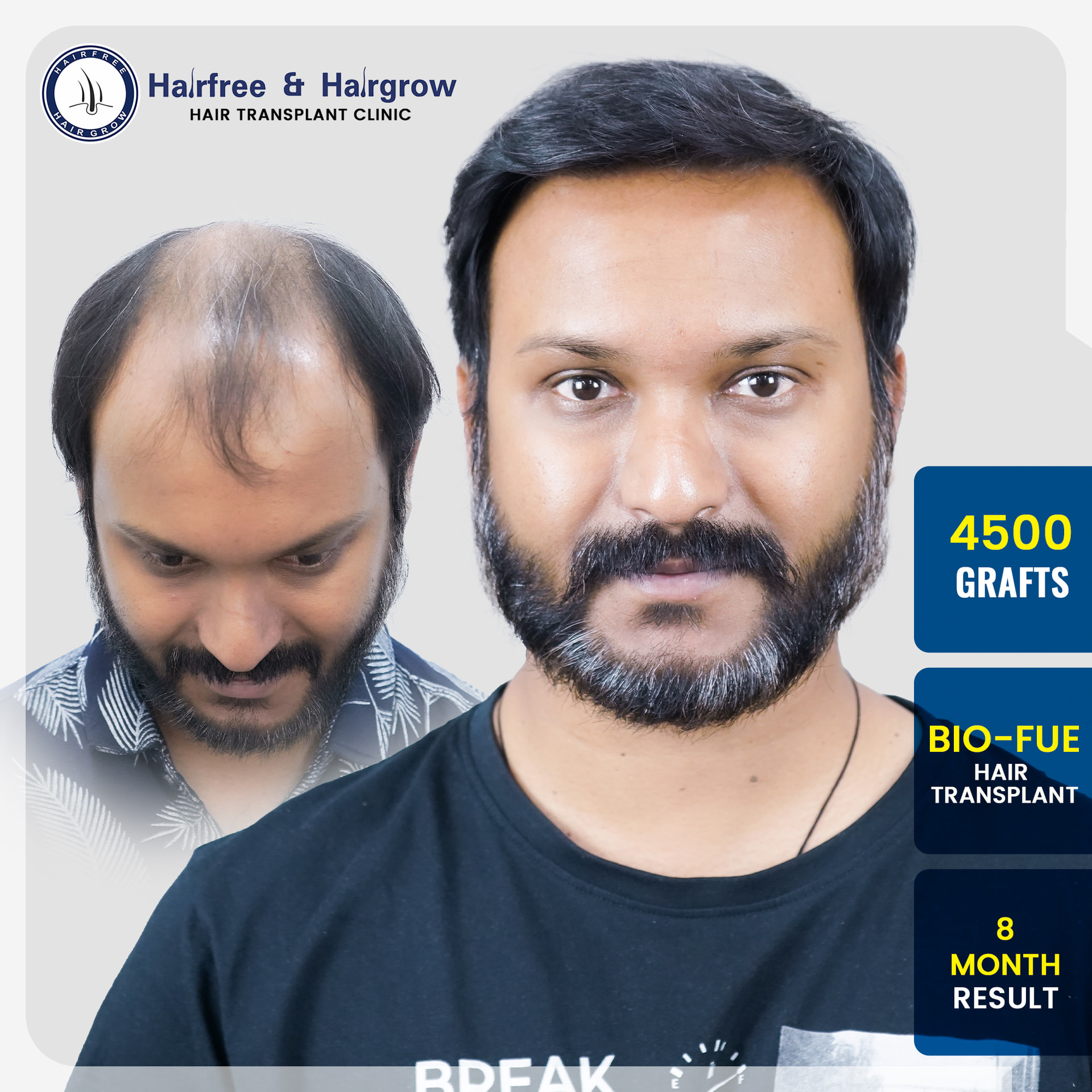
Ratul Halder underwent a 4,500-graft BIO-FUE hair transplant at Hairfree & Hairgrow Hair Transplant Clinic. The documented before-and-after photographs show improved hair coverage at approximately 8 months after the procedure, with a fuller look across the treated area.
This case study explains the documented treatment, the before-and-after appearance, and factors that can influence hair-transplant results. Individual outcomes vary, and one patient’s result should not be considered a guarantee of the same outcome for another person.
Ratul Halder’s 4,500-Graft BIO-FUE Hair Transplant
Ratul Halder underwent a 4,500-graft BIO-FUE hair transplant to address visible hair loss and improve the appearance of scalp coverage.
BIO-FUE involves the extraction of individual follicular grafts from the donor area and their placement into planned recipient areas. Hair-transplant planning is individualized because graft requirements can vary according to the pattern and extent of hair loss, donor-hair availability, existing native hair, hair characteristics, recipient-area requirements, and long-term restoration goals.
In Ratul Halder’s documented case, 4,500 grafts were used as part of the planned BIO-FUE hair-restoration procedure.
Before Hair Transplant
The pre-treatment photograph shows visible hair loss and reduced hair coverage, with increased scalp visibility through the existing hair.
Before planning a hair transplant, factors such as donor-area density, hair thickness, existing native hair, recipient-area requirements, hair-loss pattern, and available follicular grafts may be assessed.
The objective is not simply to use a specific number of grafts but to plan their distribution according to the individual’s areas of concern and available donor hair.
Treatment Details
Ratul Halder’s documented treatment included:
-
4,500 follicular grafts
-
BIO-FUE hair transplant technique
-
Individual follicular graft extraction
-
Donor-area assessment
-
Recipient-area planning
-
Strategic graft distribution
-
Consideration of natural hair-growth direction
-
Postoperative follow-up
The number of grafts required differs from patient to patient. A consultation with a qualified hair-transplant professional can help determine whether transplantation is appropriate and estimate the graft requirement for an individual’s hair-loss pattern.
8-Month Before-and-After Result
The supplied before-and-after photographs show a visible improvement in the appearance of hair coverage at approximately 8 months following the BIO-FUE procedure.
Compared with the pre-treatment photograph, the documented follow-up image shows:
-
Greater visible hair coverage
-
Reduced appearance of scalp visibility
-
A fuller-looking appearance
-
Increased visible hair presence across the treated area
An 8-month follow-up represents one stage of the hair growth and maturation process. Hair growth timelines vary between individuals, and the appearance may continue to change as transplanted hair matures.
The photographs therefore represent Ratul Halder’s documented result at approximately eight months, rather than a prediction of the outcome another patient can expect.
What Is a BIO-FUE Hair Transplant?
BIO-FUE refers to a hair-transplant approach involving individual follicular graft extraction from the donor area followed by transplantation into planned recipient areas.
Treatment planning may take into consideration:
-
Donor-hair density and quality
-
Hair caliber and texture
-
Available graft supply
-
Existing native hair
-
Recipient-area requirements
-
Hairline and density considerations
-
Natural hair-growth direction
-
Long-term hair-restoration goals
The appropriate technique and graft requirement should be determined through an individualized assessment by a qualified professional.
Why Graft Planning Matters
Hair restoration is not determined only by the number of grafts. Graft placement and distribution are also important considerations.
Available grafts may need to be distributed across areas requiring coverage while taking existing native hair and natural hair-growth direction into account. Donor-hair availability is also an important consideration because the donor supply is limited.
In Ratul Halder’s case, 4,500 grafts were used with the BIO-FUE technique, and the documented approximately 8-month photograph shows improved visual hair coverage compared with the pre-treatment image.
Hair Transplant Options in Pune
Individuals researching a hair transplant in Pune may want to consider several factors before choosing a clinic or treatment plan. These can include donor-area evaluation, hair-loss assessment, graft planning, recipient-area requirements, treatment technique, before-and-after documentation, postoperative care, and follow-up.
Patients should also discuss realistic expectations, potential limitations, recovery, and the expected hair-growth timeline during consultation.
Final Result
Ratul Halder’s case documents a 4,500-graft BIO-FUE hair transplant with an approximately 8-month before-and-after result. The supplied photographs show improved visual hair coverage and a fuller-looking appearance at the documented follow-up stage.
For individuals considering hair restoration, an individualized consultation can help assess donor availability, hair-loss pattern, graft requirements, treatment options, and realistic expectations.
Hairfree & Hairgrow Hair Transplant Clinic provides consultations for individuals exploring hair-restoration options. Patients should discuss their individual suitability, expected outcomes, recovery, and postoperative care with a qualified hair-transplant professional.
Medical Disclaimer: This case study is for informational purposes. The photographs represent one patient’s documented experience and should not be interpreted as a guaranteed or typical result. Hair-transplant outcomes vary between individuals.