This clinical case study documents the hair transplant journey of Mr. Pawan Bansal, a 38-year-old male from Haryana, India, who underwent an advanced I-FUE hair transplant procedure at Hairfree Hairgrow Clinic under the supervision of Dr. Jinkal Kunjadiya, Consultant Dermatologist.
The objective of this case report is to provide transparent insight into the diagnosis, treatment planning, surgical technique, recovery phases, and final results, helping patients understand what to expect from a modern hair transplant in India.
Patient Profile
-
Name: Pawan Bansal
-
Age: 38 Years
-
Gender: Male
-
Location: Haryana, India
Hair Loss History
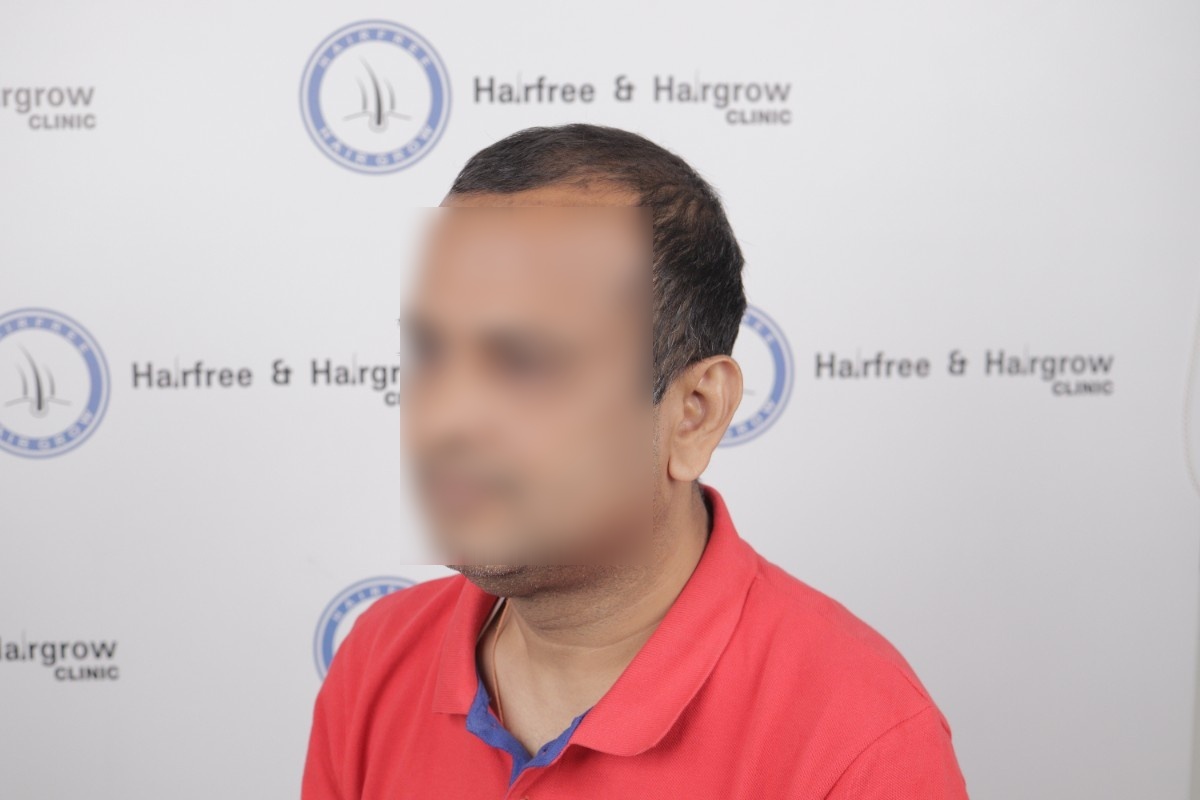
Mr. Bansal reported progressive hair fall for approximately 4–5 years, with noticeable frontal hairline recession and temporal thinning over the last 2–3 years.
On clinical examination, he presented with:
-
Receded frontal hairline
-
Thinning in the frontal and temple regions
-
Preserved mid-scalp density
-
Norwood Grade 3–4 pattern baldness
This presentation is consistent with androgenetic alopecia (male pattern baldness).
Medical and Family History
-
No family history of baldness
-
No systemic medical conditions (diabetes, hypertension, asthma)
-
No previous surgeries or allergic history
-
No keloid tendency
Previous Hair Loss Treatments
Prior to consultation, the patient had used oral multivitamins. While mild improvement was seen initially, hair fall continued, and baldness progressed, prompting him to seek professional hair restoration treatment.
Initial Consultation and Hair Analysis
Mr. Bansal consulted Dr. Jinkal Kunjadiya, an experienced dermatologist at Hairfree Hairgrow Clinic, Surat.
A comprehensive evaluation was performed, including:
-
Trichoscopy (digital scalp analysis)
-
Donor area density assessment
-
Hair shaft caliber evaluation
-
Medical history screening
Findings showed:
-
Good donor area density
-
Thick black hair follicles
-
Healthy scalp condition
After detailed counseling regarding FUE hair transplants, graft survival, recovery timelines, and realistic expectations, a customized treatment plan was created.
Hair Transplant Treatment Details
-
Procedure Dates: 1st and 2nd March 2023
-
Technique: I-FUE (Implanter Follicular Unit Extraction)
-
Total Grafts Transplanted: 4,305
Adjunct Therapies
-
Two PRP (Platelet-Rich Plasma) sessions at 3-month intervals
-
Post-transplant medications include:
-
Nutritional supplements
-
DHT blockers
-
Minoxidil 5% topical solution
-
These therapies were prescribed to support graft survival and strengthen existing hair.
Step-by-Step Hair Transplant Procedure
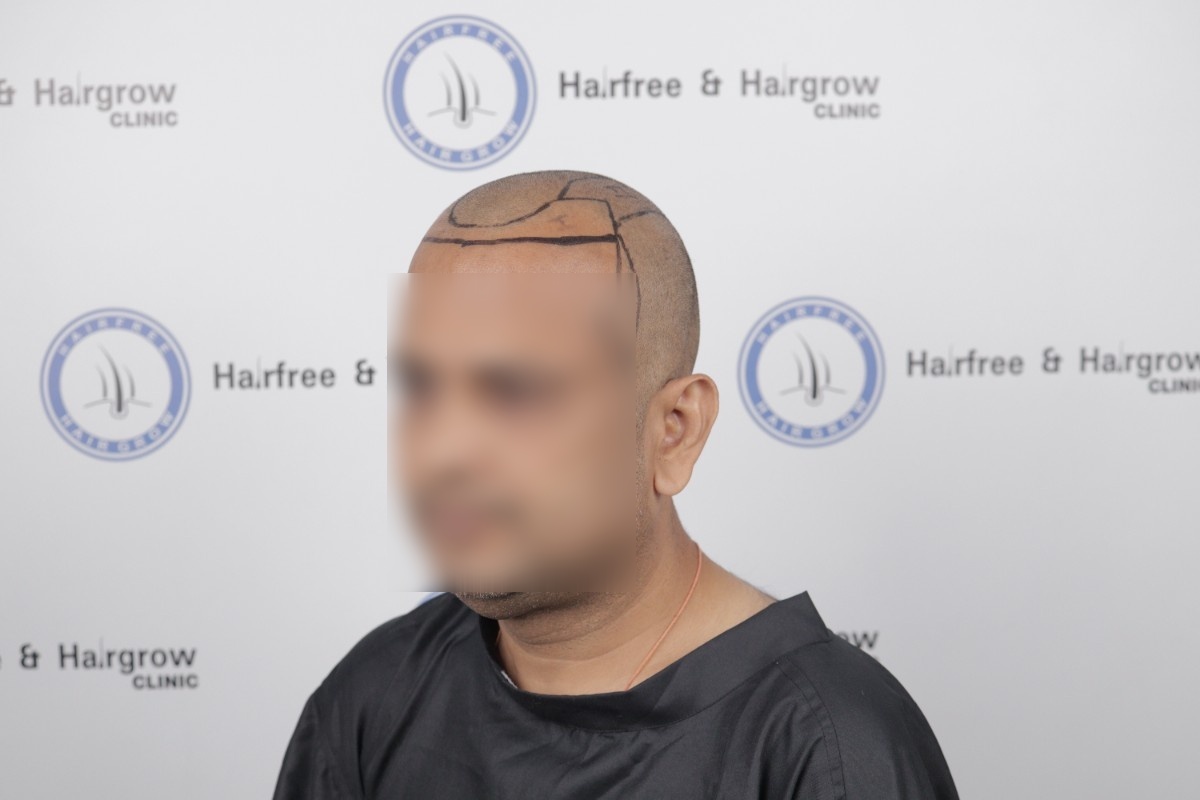
Hairline Design and Surgical Planning
A natural frontal hairline and temple restoration plan was created based on facial proportions and hair loss pattern.
Recipient and donor areas were marked after detailed planning.
Preoperative Preparation
-
Local anesthesia sensitivity testing (non-reactive)
-
Head shaving and antiseptic scalp preparation
-
Modified block anesthesia was administered using the vibration technique for patient comfort
Recipient Site Creation (Slit Making)
Sapphire metal blades were used:
-
1.2 mm for hairline
-
1.4 mm for the remaining scalp
Correct angulation and direction were maintained to ensure natural hair growth patterns.
Graft Extraction
Follicular units were harvested using a 0.8 mm titanium punch under magnification.
Extraction time:
-
Day 1: 80 minutes
-
Day 2: 55 minutes
Graft Distribution:
-
15% single-hair grafts
-
85% multi-hair grafts (double and triple units)
This graft composition supports higher cosmetic density.
Total grafts extracted: 4,305
Graft Preservation
Harvested grafts were stored at 4°C in RL solution using a graft chiller system, preserving follicular viability.
Graft Implantation
Implantation was performed using K.E.E.P implanters of varying sizes for 1, 2, and 3 follicular unit grafts.
Implantation time:
-
Day 1: Approximately 2 hours
-
Day 2: Approximately 1.5 hours
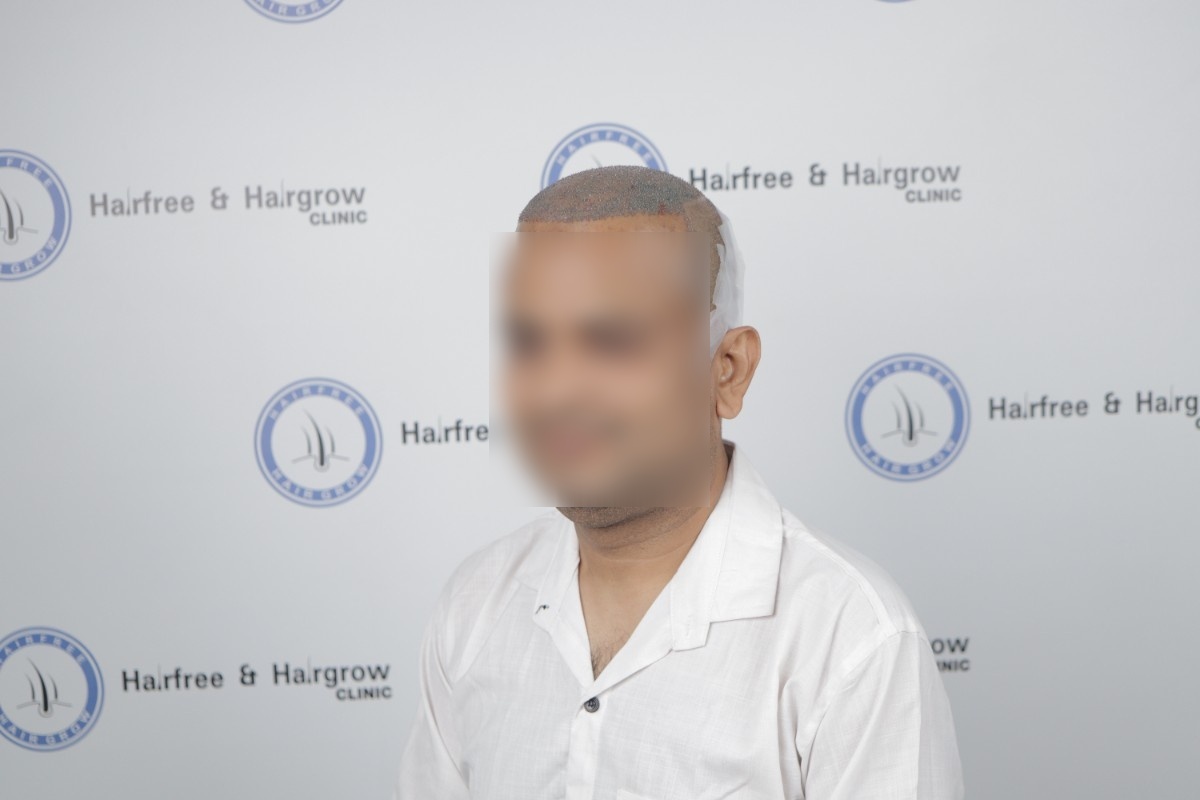
Post-procedure dressing, medications, and written aftercare instructions were provided. Direct physician follow-up contact was shared with the patient.
Post-Transplant Recovery and Hair Growth Timeline
Shedding Phase (0–6 Weeks)
Approximately 40% of transplanted hairs shed during the normal post-transplant phase.
-
First PRP performed at 2 months
-
Existing mid-scalp hair showed improved strength.
-
Hair fall stabilized
The donor area healed fully within 30 days.
Early Growth Phase (3–5 Months)
New hair follicles began emerging gradually.
The second PRP session was administered to enhance follicular stimulation.
By month five, visible density improvement was noted.
Active Growth Phase (6–9 Months)
Nearly 90% of the transplanted hair had grown.
Haircuts and styling were possible.
A booster PRP was provided at nine months.
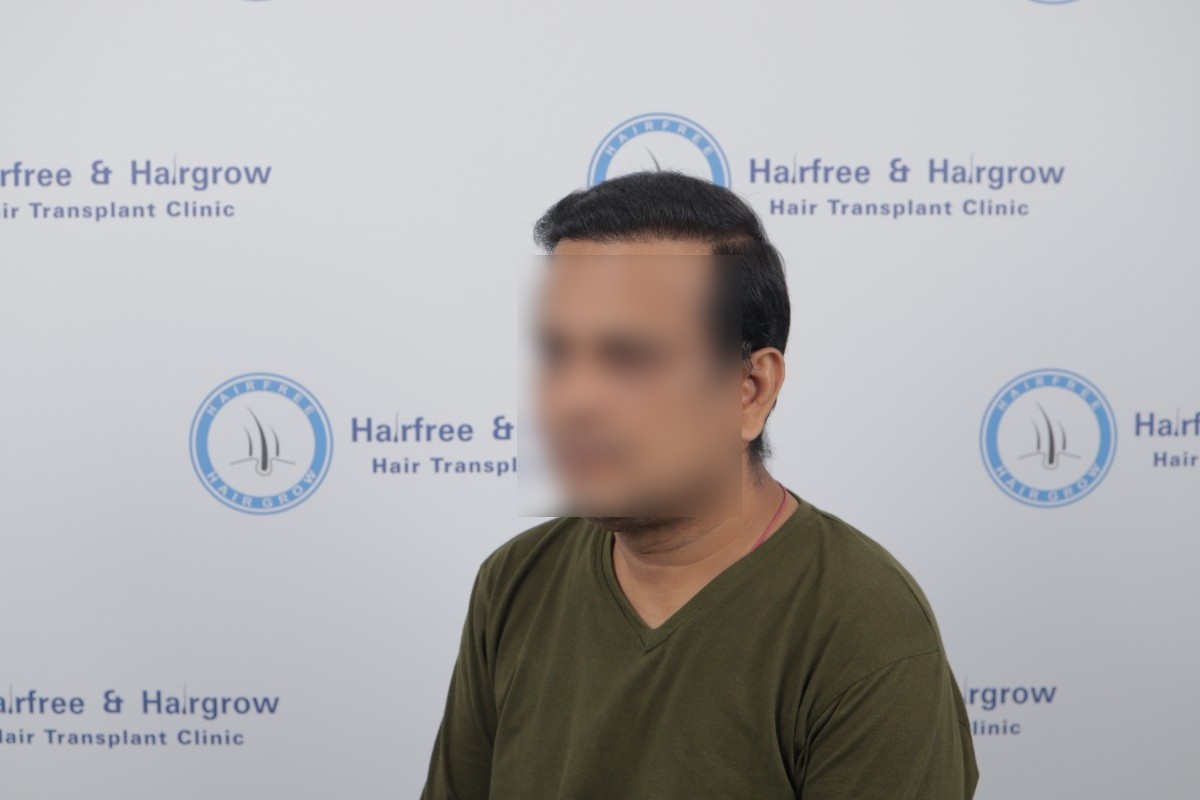
Final Result at 12 Months
Complete results were achieved after one year.
The patient demonstrated:
-
Natural frontal hairline
-
Restored temple density
-
Uniform scalp coverage
-
Healthy donor area appearance
Mr. Bansal is currently maintaining results with minoxidil and periodic PRP as needed.
He reports high satisfaction and improved confidence in social and professional environments.
Conclusion
This case demonstrates the effectiveness of I-FUE hair transplants combined with PRP therapy in treating male pattern baldness when performed by experienced medical professionals using evidence-based protocols.
Proper patient selection, donor management, surgical precision, and postoperative care played a critical role in achieving long-term success.
Looking for a Permanent Hair Loss Solution?
If you are experiencing hair thinning or baldness and considering a hair transplant in India, our expert dermatology team offers advanced diagnostics and personalized treatment plans.
Contact Hairfree Hairgrow Clinic for a detailed scalp analysis and professional consultation.