Patient Profile
-
Patient: Sagar Mate
-
Gender: Male
-
Procedure: BIO-FUE Hair Transplant
-
Total Grafts: 4,000 grafts
-
Follow-Up: Approximately 10 months
-
Primary Concern: Visible hair loss and reduced scalp coverage
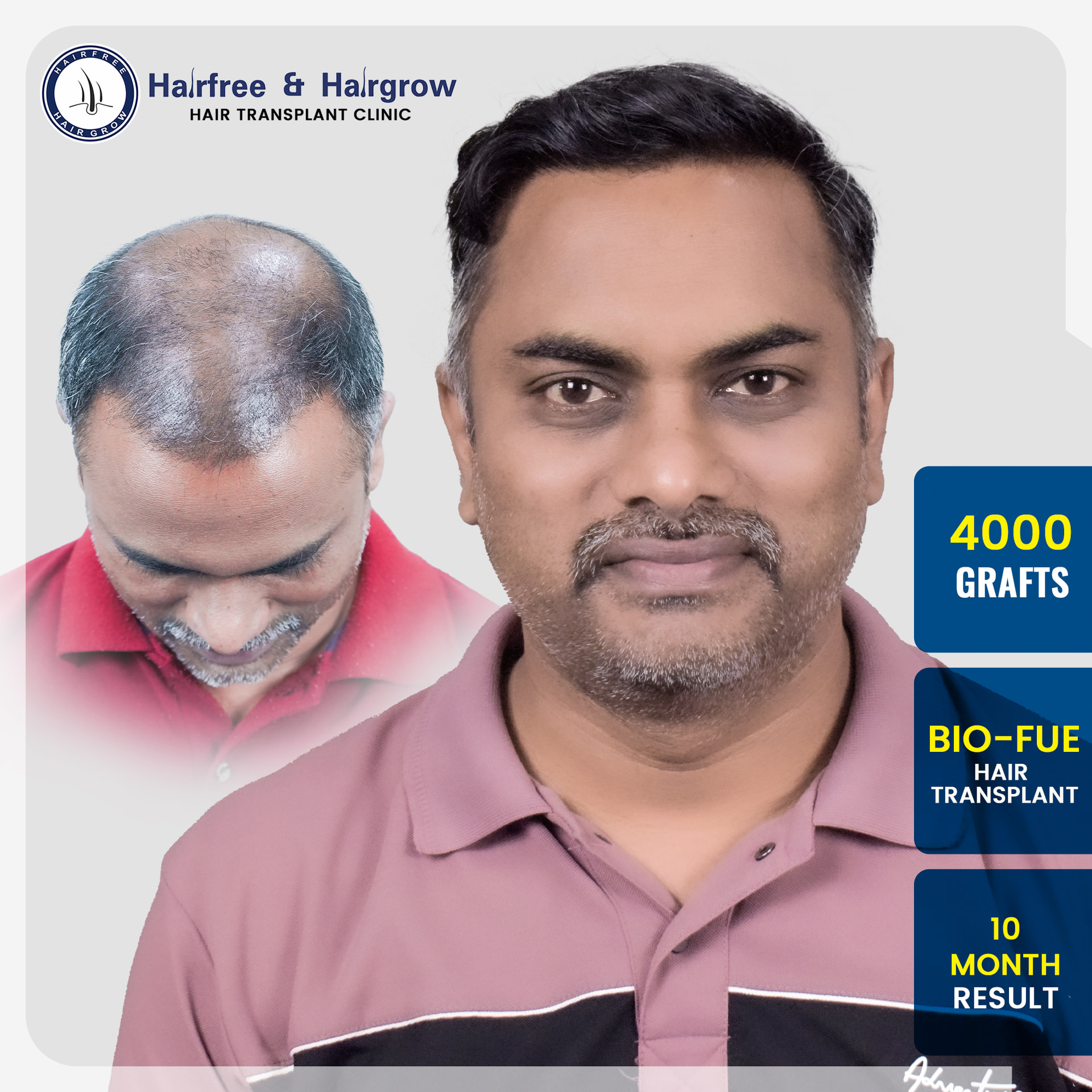
4,000-Graft BIO-FUE Hair Transplant
Sagar Mate underwent a 4,000-graft BIO-FUE hair transplant to address visible hair loss and improve the appearance of scalp coverage.
The procedure involved harvesting individual follicular grafts from the donor area and strategically placing them into areas affected by hair loss. Graft distribution and placement can be planned according to the patient’s existing hair pattern, recipient-area requirements, donor availability, hair characteristics, and desired coverage.
Because every hair-loss pattern is different, the number of grafts required and the achievable coverage should be determined through an individual assessment rather than using a fixed graft number for every patient.
Hair Loss Concerns
Before the procedure, the documented photograph shows significant visible scalp and reduced hair coverage, particularly across the frontal and upper scalp region.
The treatment objective was to improve the overall appearance of hair coverage while making appropriate use of the available donor hair.
Treatment planning may take several factors into consideration, including:
-
Existing hair density
-
Degree and pattern of hair loss
-
Donor-area density and quality
-
Recipient-area size
-
Hair thickness and characteristics
-
Natural hair-growth direction
-
Available grafts
-
Long-term hair restoration goals
Treatment Highlights
Sagar’s documented hair restoration case included:
-
4,000 follicular grafts
-
BIO-FUE hair transplant
-
Individualized graft planning
-
Donor-area assessment
-
Recipient-area planning
-
Strategic graft distribution
-
Consideration of natural hair direction
-
Long-term restoration planning
10-Month Hair Transplant Result
At approximately 10 months after the procedure, the documented before-and-after photographs show a visible improvement in the overall appearance of hair coverage compared with the pre-treatment photograph.
The follow-up image shows:
-
Improved visible hair coverage
-
Fuller-looking appearance
-
Reduced scalp visibility in the treated region
-
Improved overall appearance of the frontal and upper scalp
-
A more balanced appearance of the treated area
Hair growth continues to develop at different rates among individuals, and the appearance of a transplant can change over time. The final outcome may depend on factors including donor-hair characteristics, graft quality, hair caliber, genetics, existing native hair, healing, and postoperative care.
What Is a BIO-FUE Hair Transplant?
BIO-FUE refers to a follicular-unit extraction-based hair transplantation approach in which individual follicular grafts are harvested from the donor area and transplanted into planned recipient areas.
The planning of a hair transplant involves more than simply determining the number of grafts. Donor availability, recipient-area requirements, hair direction, graft characteristics, existing native hair, and long-term hair-loss progression can all influence treatment planning.
A qualified hair-transplant professional should assess the patient’s individual condition before recommending the appropriate treatment approach and graft requirement.
Why Individualized Hair Transplant Planning Matters
A successful-looking hair transplant requires careful consideration of both the donor and recipient areas.
For a patient such as Sagar, treatment planning can involve determining where grafts are most needed, how available grafts should be distributed, and how the transplanted hair can be positioned to complement the patient’s existing hair pattern.
The goal is not simply to add grafts but to use the available donor hair strategically to achieve appropriate coverage while maintaining a natural-looking appearance.
Choosing a Hair Transplant Clinic in India
People researching hair transplant clinics in India often compare factors such as
-
Doctor and clinical-team experience
-
Hair-transplant technique
-
Donor-area assessment
-
Graft-planning methodology
-
Recipient-area design
-
Consultation process
-
Before-and-after case documentation
-
Postoperative follow-up
Sagar Mate’s case represents a documented 4,000-graft BIO-FUE hair transplant result approximately 10 months after treatment at Hairfree & Hairgrow Hair Transplant Clinic.
However, one patient’s result should not be considered representative of every patient’s potential outcome. Hair transplantation should always be planned according to individual hair-loss characteristics, donor availability, and realistic coverage expectations.
Final Outcome
Sagar Mate’s documented 4,000-graft BIO-FUE hair transplant shows an improvement in the appearance of scalp coverage at the approximately 10-month follow-up.
The case highlights the importance of individualized assessment, donor-area evaluation, graft planning, recipient-area design, strategic graft distribution, and appropriate postoperative care in hair restoration.
Disclaimer
This case study represents one documented patient’s result approximately 10 months after hair transplantation. Hair-transplant results vary between individuals and are not guaranteed. Factors such as donor-hair availability, hair characteristics, genetics, existing hair loss, graft characteristics, treatment planning, healing, and postoperative care may influence the final appearance. The results shown in before-and-after photographs should not be interpreted as a guarantee of similar results for other patients.