Patient Profile
-
Patient Name: Pawan Singh
-
Gender: Male
-
Procedure: BIG-FUE Hair Transplant
-
Total Grafts: 3,800 grafts
-
Result Timeline: 11 months after the procedure
-
Location: Pune, Maharashtra, India
-
Doctor: Dr. Kiran Chotaliya
-
Primary Concern: Hair loss and reduced scalp coverage
-
Treatment Goal: Improve hair coverage, apparent density, and frontal appearance
Overview
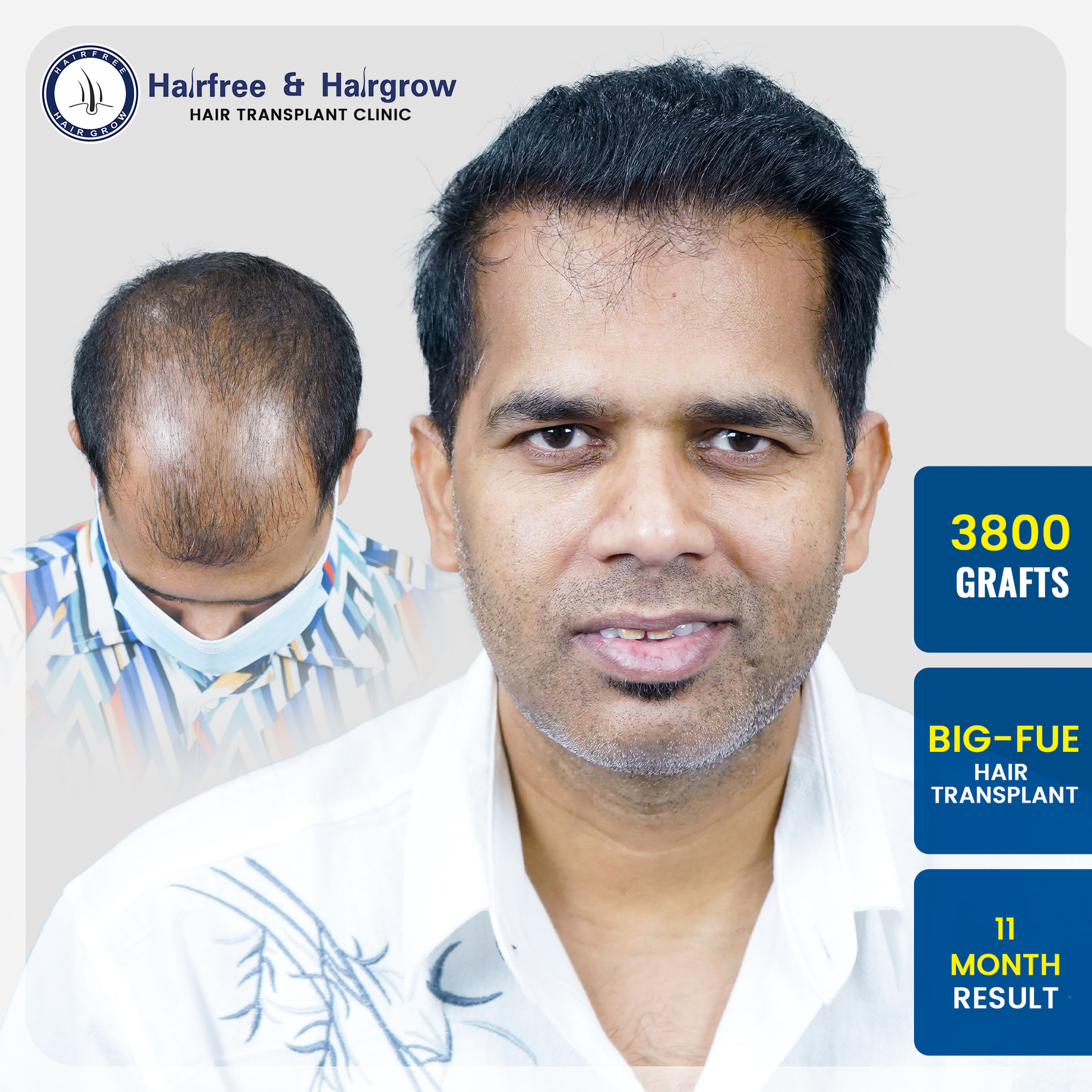
Pawan Singh presented with noticeable hair loss and reduced scalp coverage, particularly across the frontal and top areas.
Following an individualized assessment, Dr. Kiran Chotaliya planned a 3,800-graft BIG-FUE hair transplant based on the patient’s hair-loss pattern, donor availability, recipient-area requirements, and desired coverage.
At approximately 11 months after the procedure, the photograph shows improved visible hair coverage and a fuller-looking appearance compared with the pre-treatment image.
Hair-transplant outcomes can vary between individuals, and the appearance of a result depends on factors such as donor-hair characteristics, recipient-area conditions, healing, genetics, and post-operative care.
Hair Loss Concerns
Before treatment, Pawan Singh had visible thinning and reduced coverage affecting the scalp.
The treatment goals included:
-
Improving frontal hair coverage
-
Increasing visible scalp coverage
-
Improving apparent hair density
-
Restoring areas affected by hair loss
-
Creating a fuller-looking hairstyle
-
Maintaining a natural-looking transition with existing hair
Donor and Recipient Area Planning
Successful hair restoration involves assessment and planning of both the donor and recipient areas.
For Pawan’s treatment, planning considerations included:
-
Donor-area availability
-
Donor-hair density
-
Graft requirements
-
Hair shaft characteristics
-
Existing native hair
-
Recipient-area size
-
Extent of hair loss
-
Desired coverage
-
Natural hair-growth direction
-
Long-term donor preservation
-
Potential future hair loss
The treatment plan used 3,800 grafts according to the patient’s individual restoration requirements.
3,800-Graft BIG-FUE Hair Transplant in Pune
Pawan underwent a BIG-FUE hair transplant, with follicular grafts harvested from the donor area and placed into planned recipient areas.
Graft placement was planned around the patient’s existing hair pattern, recipient-area requirements, natural growth direction, and desired coverage.
Treatment Highlights
-
3,800 grafts
-
BIG-FUE hair transplant
-
Individualized treatment planning
-
Donor-area evaluation
-
Strategic graft distribution
-
Focus on frontal and overall coverage
-
Consideration of natural hair-growth direction
-
Donor preservation considerations
-
Long-term restoration planning
Role of Dr. Kiran Chotaliya
Dr. Kiran Chotaliya evaluated Pawan Singh’s hair-loss pattern and restoration requirements before treatment planning. The assessment considered donor availability, recipient-area coverage, existing hair, and the number of grafts required for the planned restoration.
Rather than determining treatment solely from a graft number, hair-transplant planning should be individualized according to each patient’s characteristics and restoration goals.
11-Month Hair Transplant Result
At approximately 11 months after the BIG-FUE procedure, the before-and-after photographs demonstrate visible improvement in hair coverage and overall appearance.
The post-treatment photograph shows:
-
Improved frontal coverage
-
Greater visible scalp coverage
-
Fuller-looking hair
-
Reduced scalp visibility in treated areas
-
Improved overall hair appearance
The 11-month photograph represents the documented follow-up point shown in this case study. Final results can differ between patients because hair growth and maturation are individual processes.
Why Is Graft Planning Important?
The required number of grafts is not the same for every patient. Planning may depend on:
-
Degree and distribution of hair loss
-
Size of the recipient area
-
Donor-hair availability
-
Donor density
-
Hair thickness
-
Follicular-unit characteristics
-
Existing native hair
-
Desired coverage
-
Long-term donor preservation
-
Potential future hair loss
In Pawan Singh’s case, 3,800 grafts were used as part of his individualized hair-restoration plan.
What Is BIG-FUE Hair Transplant?
BIG-FUE is a graft-based hair-transplant approach involving the extraction of individual follicular units from the donor area and their placement into planned recipient areas.
The appearance of the result can be influenced by:
-
Donor-hair quality
-
Graft selection
-
Hairline and recipient-area planning
-
Graft distribution
-
Implantation direction
-
Recipient-area characteristics
-
Existing native hair
-
Healing
-
Post-operative care
Patients should therefore undergo an individual assessment before deciding on a hair-transplant procedure.
Choosing a Hair Transplant Doctor in India
Patients researching the “best hair transplant doctor in India” often compare the doctor’s experience, treatment approach, graft-planning process, documented results, and suitability of the proposed procedure.
For this case, Dr. Kiran Chotaliya planned and guided Pawan Singh’s treatment at Hairfree & Hairgrow Hair Transplant Clinic in Pune. Individual consultation remains important because the appropriate procedure and graft requirement can differ significantly from one patient to another.
Final Outcome
Pawan Singh’s 3,800-graft BIG-FUE hair transplant shows visible improvement at the 11-month follow-up. The before-and-after photographs demonstrate increased hair coverage and a fuller-looking overall appearance compared with the pre-treatment photograph.
This case highlights the importance of:
-
Individualized hair-loss assessment
-
Donor-area evaluation
-
Appropriate graft planning
-
Recipient-area planning
-
Strategic graft distribution
-
Natural hair-growth direction
-
Long-term restoration planning
-
Appropriate post-operative care
For people researching hair transplants in Pune, Pawan Singh’s case demonstrates how treatment planning can be tailored to an individual’s existing hair, donor availability, recipient requirements, and restoration goals.
Disclaimer
Hair-transplant results vary between individuals. This case study represents one patient’s documented result at approximately 11 months after treatment and should not be interpreted as a guarantee of similar results. Individual hair characteristics, treatment planning, healing, genetics, existing hair loss, and post-operative care can influence outcomes.