Disclaimer: Individual hair transplant outcomes vary based on age, genetics, donor hair quality, extent of hair loss, medical history, lifestyle, and adherence to post-operative instructions. This case study highlights one patient’s experience and should not be considered a guarantee of similar results.
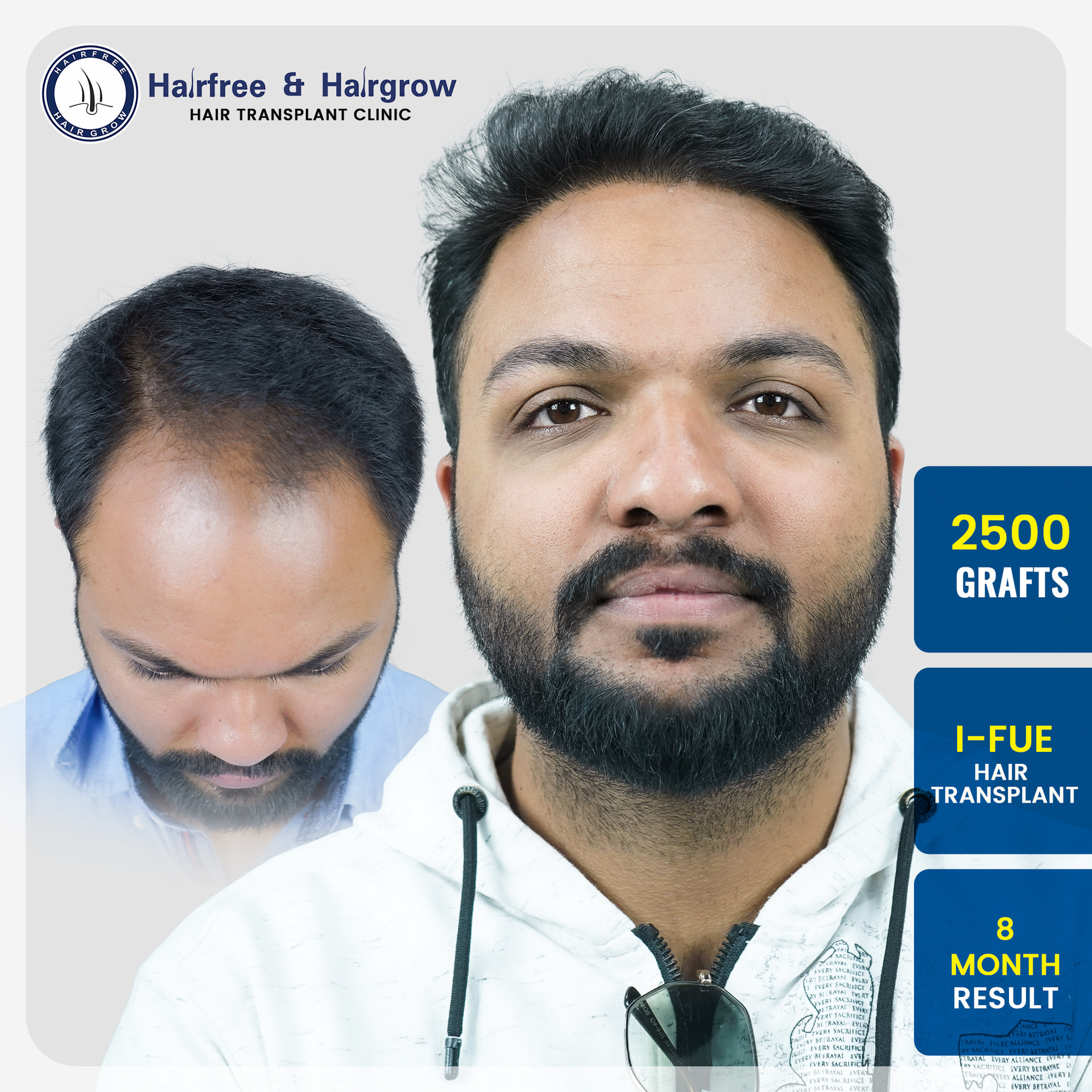
Patient Overview
-
Patient Name: Nilesh Gorde
-
Gender: Male
-
Age Group: Late 20s to Early 30s
-
Hair Loss Pattern: Frontal Hairline Recession with Frontal Scalp Thinning
-
Procedure Performed: Advanced I-FUE Hair Transplant
-
Total Grafts Implanted: 2,500 Grafts
-
Treatment Areas:
-
Frontal Hairline
-
Frontal Scalp
-
-
Result Timeline: 8 Months After Hair Transplant
Hair transplantation has become one of the most effective long-term solutions for male pattern baldness. This case study showcases the real 8-month result of a patient who underwent a 2,500-graft I-FUE hair transplant to restore his receding hairline and frontal scalp density. The treatment focused on creating a natural-looking hairline while improving overall facial appearance.
If you are searching for the best hair doctor in Pune, this patient journey demonstrates how personalized planning, advanced I-FUE technology, and precise graft placement can deliver natural, long-lasting hair restoration results.
Hair Loss Before the Hair Transplant
Before treatment, Nilesh experienced progressive male pattern baldness that primarily affected the frontal hairline. The receding hairline and thinning frontal scalp made the forehead appear larger and reduced hair density from the front view. His hair loss also limited hairstyle choices and affected overall facial balance.
Following a detailed scalp analysis and donor area evaluation, our hair restoration specialists recommended an advanced 2,500-graft I-FUE hair transplant to rebuild the hairline and improve frontal density while preserving donor hair for future needs.
Primary Hair Loss Concerns
-
Receding frontal hairline
-
Frontal scalp thinning
-
Enlarged forehead appearance
-
Reduced hair density
-
Visible scalp from the front
-
Early-stage male pattern baldness
-
Desire for a natural-looking hairline
-
Long-term hair restoration
Comprehensive Hair and Donor Area Assessment
Every successful hair transplant begins with a personalized consultation.
Before surgery, Nilesh underwent a detailed assessment that included:
-
Hair loss pattern analysis
-
Donor area density evaluation
-
Hair shaft thickness assessment
-
Follicular unit examination
-
Scalp health evaluation
-
Hair growth direction analysis
-
Facial proportion assessment
-
Recipient area planning
-
Long-term donor preservation strategy
This comprehensive evaluation helped determine the ideal graft count and implantation pattern to achieve natural density without overharvesting the donor area.
Why Was a 2,500-Graft Hair Transplant Recommended?
Based on the extent of hair loss, available donor hair, scalp characteristics, and long-term restoration goals, approximately 2,500 grafts were considered ideal.
This graft count provided sufficient coverage for:
-
Hairline reconstruction
-
Frontal scalp restoration
-
Improved density
-
Natural facial framing
-
Balanced aesthetic appearance
Personalized Hair Transplant Planning
Each hair transplant procedure is customized according to the patient’s facial features, hair characteristics, and future hair loss progression.
For Nilesh, the treatment plan focused on:
-
Restoring a youthful but age-appropriate hairline
-
Increasing frontal density
-
Maintaining natural hair direction
-
Preserving donor follicles
-
Achieving balanced facial aesthetics
Treatment Objectives
-
Restore the frontal hairline
-
Improve frontal scalp coverage
-
Increase hair density
-
Create a natural hairline design
-
Preserve donor hair
-
Ensure long-term aesthetic results
-
Deliver natural-looking hair growth
Natural Hairline Design
Hairline design plays a critical role in achieving realistic hair transplant results.
The hairline was customized after considering:
-
Facial symmetry
-
Existing native hair
-
Hair texture
-
Hair thickness
-
Hair growth direction
-
Age
-
Future hair loss progression
-
Overall facial proportions
Hairline Design Features
-
Soft and natural frontal hairline
-
Single-hair graft placement at the front
-
Gradual density transition
-
Natural implantation angles
-
Symmetrical appearance
-
Seamless blending with existing hair
The result is a hairline that looks natural from every angle and under different lighting conditions.
Advanced 2,500-Graft I-FUE Hair Transplant Procedure
Nilesh underwent an advanced I-FUE hair transplant, a minimally invasive procedure designed to maximize graft survival and ensure natural hair growth.
Treatment Areas
-
Frontal Hairline
-
Frontal Scalp
Procedure Highlights
-
2,500 grafts implanted
-
Advanced I-FUE technique
-
Precision follicular unit extraction
-
High graft survival protocol
-
Uniform graft distribution
-
Natural implantation angles
-
Minimal scarring
-
Donor area preservation
Each graft was implanted following the natural direction and angle of surrounding hair to produce realistic and dense coverage.
Patient Safety During the Procedure
Patient safety remained a priority throughout the procedure.
The surgery was performed under local anesthesia using sterile surgical protocols. Every stage of the treatment was carefully monitored to maximize patient comfort and support optimal graft survival.
Recovery After Hair Transplant
The recovery progressed as expected.
Temporary redness, mild swelling, and scab formation resolved during the first two weeks. Nilesh followed personalized post-operative instructions and attended scheduled follow-up appointments to monitor healing and hair growth.
Most patients resume normal daily activities within a few days, although recovery varies from person to person.
8-Month Hair Transplant Result
At 8 months, Nilesh achieved significant hair growth across the treated areas.
The frontal hairline appears naturally restored with noticeably improved density and better scalp coverage. The transplanted hair blends seamlessly with existing hair, creating a fuller, healthier, and younger appearance.
While additional maturation may continue over the coming months, the improvement at eight months already demonstrates excellent progress.
Visible Improvements After 8 Months
-
Naturally restored frontal hairline
-
Increased frontal density
-
Fuller appearance
-
Reduced scalp visibility
-
Improved hairline definition
-
Better facial balance
-
Healthy hair growth
-
Natural hair direction
-
Well-preserved donor area
-
Increased confidence
Hair Growth Timeline
Week 1
Healing begins with mild redness, swelling, and temporary scab formation.
Month 1
Transplanted follicles become securely established while both donor and recipient areas continue healing.
Months 2 to 3
Temporary shedding (shock loss) may occur before new hair growth begins.
Months 4 to 6
New hair starts emerging with gradual improvements in density and hairline definition.
Months 7 to 8
Hair becomes thicker and denser and blends naturally with surrounding hair, delivering noticeable cosmetic improvement.
Months 12+
Hair continues to mature with enhanced texture, density, and natural appearance.
Before and After Hair Transplant
Before Treatment
-
Receding frontal hairline
-
Frontal scalp thinning
-
Visible scalp
-
Lower hair density
-
Larger forehead appearance
-
Limited hairstyle options
After 8 Months
-
Naturally restored hairline
-
Fuller frontal density
-
Improved scalp coverage
-
Healthier hair growth
-
Better facial aesthetics
-
More youthful appearance
-
Improved confidence