Disclaimer
Individual hair transplant results vary depending on age, genetics, hair-loss pattern and progression, donor hair quality, medical history, medications, lifestyle, and adherence to post-operative care. This case study represents the experience of one patient and should not be considered a guarantee of identical results for other individuals.
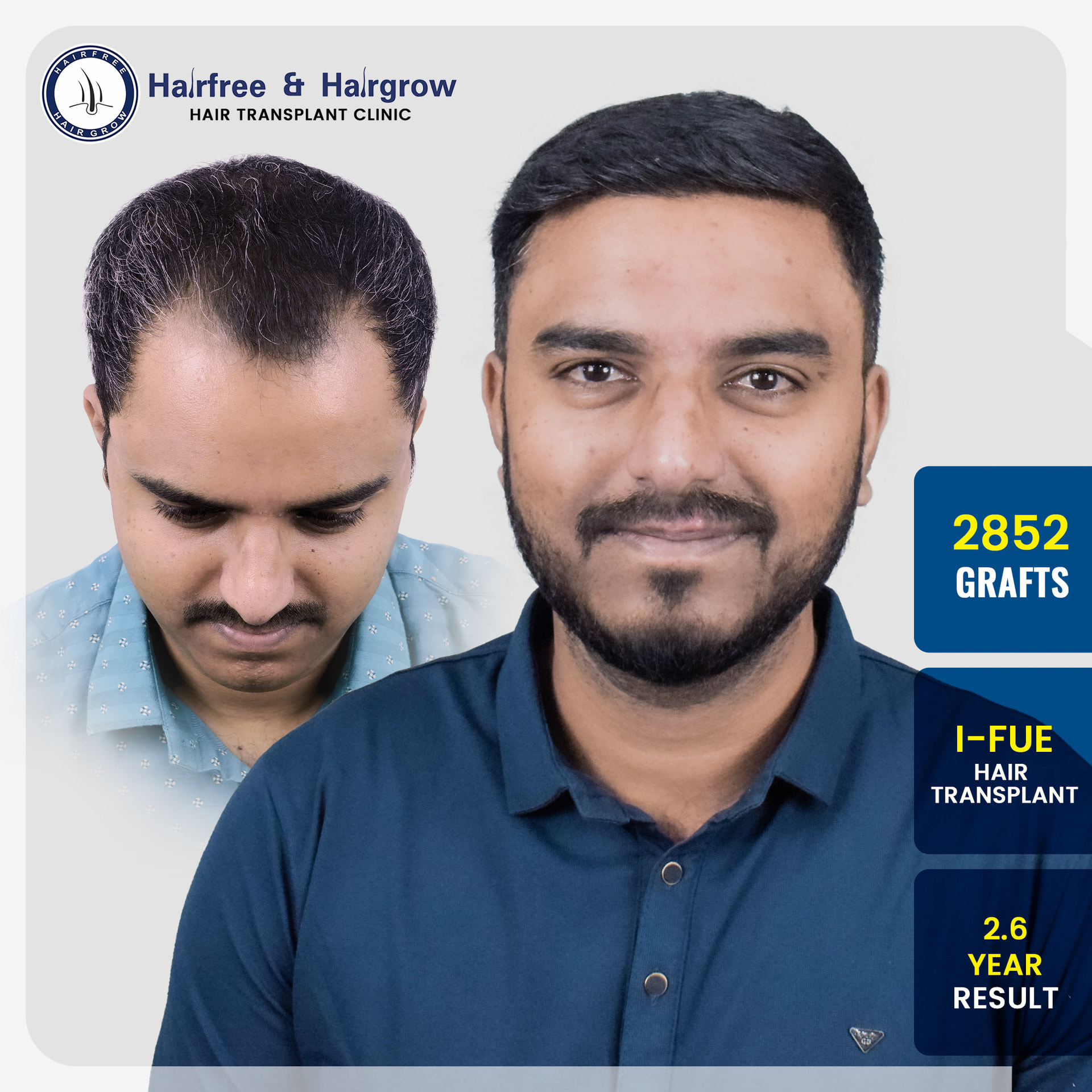
Patient Overview
-
Patient Name: Mayur Khairnar
-
Gender: Male
-
Procedure Performed: I-FUE Hair Transplant
-
Total Grafts Implanted: 2,852 grafts
-
Result Timeline: 2.6 years after hair transplant
-
Treatment Focus: Frontal hairline and scalp coverage
Overview
Hairline recession and reduced frontal hair density can significantly change facial appearance and make styling more difficult. This case study highlights Mayur Khairnar’s 2.6-year hair transplant result following a 2,852-graft I-FUE hair transplant.
The procedure was planned to restore the frontal hairline, improve hair density, and create a natural transition between transplanted and existing native hair. The long-term result demonstrates mature hair growth and improved overall scalp coverage.
Hair Loss Before the Hair Transplant
Before treatment, Mayur experienced visible frontal hairline recession and reduced density across the front and upper scalp. The thinning pattern resulted in increased scalp visibility and a more prominent forehead appearance.
A personalized assessment of the recipient and donor areas was used to determine the appropriate graft requirement and design a natural-looking hairline.
Primary Hair Loss Concerns
-
Receding frontal hairline
-
Frontal hair thinning
-
Reduced hair density
-
Increased scalp visibility
-
Difficulty maintaining desired hairstyles
-
Need for natural-looking hairline restoration
Hair & Donor Area Assessment
Before the procedure, the treatment plan was developed after evaluating the available donor hair and recipient areas.
The assessment included:
-
Hair-loss pattern analysis
-
Donor-area evaluation
-
Hair density assessment
-
Hair shaft characteristics
-
Recipient-area mapping
-
Hair growth direction
-
Scalp condition
-
Facial proportions
-
Long-term hair restoration planning
Based on the assessment, 2,852 grafts were selected for transplantation to provide appropriate frontal coverage while maintaining responsible donor-area management.
Why Were 2,852 Grafts Recommended?
Hair transplant treatment is customized according to the patient’s degree of hair loss, donor availability, hair characteristics, recipient-area size, and desired cosmetic outcome.
For Mayur, 2,852 grafts were planned for the following:
-
Reconstruct the receding frontal hairline
-
Improve frontal hair density
-
Reduce visible scalp
-
Create a natural transition zone
-
Blend transplanted hair with existing native hair
-
Maintain appropriate donor-area preservation
Personalized Hair Transplant Planning
Natural-looking hair restoration depends on careful planning rather than simply increasing the number of grafts.
Mayur’s treatment plan focused on:
-
Designing a natural and age-appropriate hairline
-
Using appropriate grafts in the frontal zone
-
Creating gradual density from the hairline backward
-
Following natural hair growth directions
-
Maintaining suitable implantation angles
-
Blending transplanted follicles with native hair
-
Preserving donor hair for long-term needs
Treatment Objectives
-
Restore the frontal hairline
-
Improve frontal density
-
Reduce scalp visibility
-
Create natural hair direction
-
Achieve seamless blending with native hair
-
Improve overall facial balance
-
Maintain a natural appearance over the long term
Natural Hairline Design
Hairline design plays an important role in the final appearance of a hair transplant. The frontal hairline was planned with attention to facial proportions and the natural characteristics of the patient’s existing hair.
Hairline Design Features
-
Natural-looking frontal contour
-
Irregular and soft hairline transition
-
Strategic placement of finer grafts
-
Appropriate implantation angles
-
Gradual density transition
-
Seamless blending with surrounding hair
2,852-Graft I-FUE Hair Transplant Procedure
The procedure was performed using the I-FUE hair transplant technique, with 2,852 follicular unit grafts carefully extracted and implanted into the designated recipient areas.
Procedure Highlights
-
2,852 grafts implanted
-
I-FUE hair transplant technique
-
Precision follicular unit extraction
-
Customized graft placement
-
Natural implantation direction
-
Carefully planned frontal density
-
Focus on graft handling and viability
-
Donor-area preservation strategy
-
Microsurgical graft implantation
Patient Safety During the Procedure
The procedure was performed under local anesthesia using appropriate sterile surgical protocols. Careful graft handling and controlled implantation were used throughout the procedure to support healing and graft survival.
Recovery After Hair Transplant
The early recovery period typically involves temporary redness, mild swelling, and small scabs in the recipient and donor areas. These effects gradually settle as the scalp heals.
Mayur followed the recommended post-operative care instructions and attended follow-up evaluations to monitor the progress of his hair restoration.
2.6-Year Hair Transplant Result
At 2.6 years after the I-FUE hair transplant, the transplanted hair demonstrates long-term maturation and a natural appearance.
The frontal hairline appears fuller and well-defined, while the transplanted hair blends naturally with the surrounding native hair. The increased density reduces scalp visibility and creates a more balanced overall appearance.
The extended follow-up period also provides a useful view of the long-term cosmetic result after the transplanted follicles have matured.
Visible Improvements After 2.6 Years
-
Natural-looking frontal hairline
-
Improved frontal density
-
Reduced scalp visibility
-
Mature transplanted hair
-
Natural hair direction
-
Better overall hair coverage
-
Seamless blending with native hair
-
Fuller frontal appearance
-
Improved facial balance
-
Long-term cosmetic improvement
Hair Growth Timeline
Week 1
The donor and recipient areas begin healing. Temporary redness, swelling, and small scabs may be present.
Month 1
The scalp continues recovering, while transplanted hairs may begin entering the temporary shedding phase.
Months 2–3
Temporary shedding of transplanted hairs may occur before new hair growth begins.
Months 4–6
New hair growth gradually becomes visible, with progressive improvement in frontal coverage and density.
Months 7–12
The transplanted hair continues to thicken and mature while blending with surrounding native hair.
Months 12–18
Hair thickness, texture, and overall density continue improving as the transplanted follicles mature.
2.6 Years
At 2.6 years, the transplanted hair demonstrates a mature, established appearance with natural-looking frontal coverage and long-term cosmetic improvement.
Before and After Hair Transplant
Before Treatment
-
Receding frontal hairline
-
Frontal thinning
-
Reduced hair density
-
Increased scalp visibility
-
Larger-looking forehead
-
Limited styling options
-
Uneven frontal coverage
After 2.6 years
-
Naturally restored-looking hairline
-
Improved frontal density
-
Fuller hair appearance
-
Reduced scalp visibility
-
Mature transplanted hair
-
Natural growth direction
-
Better integration with native hair
-
Improved facial proportions
-
More styling flexibility
Conclusion
Mayur Khairnar’s 2.6-year hair transplant result following a 2,852-graft I-FUE procedure demonstrates the potential for long-term improvement in frontal hairline appearance and hair density when treatment is carefully planned and performed.
The restoration focused on rebuilding the frontal hairline, improving density, reducing scalp visibility, and creating a natural transition between transplanted and existing hair. At the 2.6-year stage, the transplanted follicles show mature growth and a fuller, natural-looking appearance.
Individual outcomes vary, and factors such as donor hair quality, genetics, progression of hair loss, medical history, graft characteristics, and post-operative care can influence the final result.