Patient Profile
-
Patient: Ramesh Pangaonkar
-
Procedure: I-FUE Hair Transplant
-
Total Grafts: 3,000 grafts
-
Follow-Up: Approximately 8 months
-
Clinic: Hairfree & Hairgrow Hair Transplant Clinic
-
Primary Concern: Visible hair thinning and reduced scalp coverage
-
Documented Result: Improved appearance of hair coverage and fullness at the 8-month follow-up
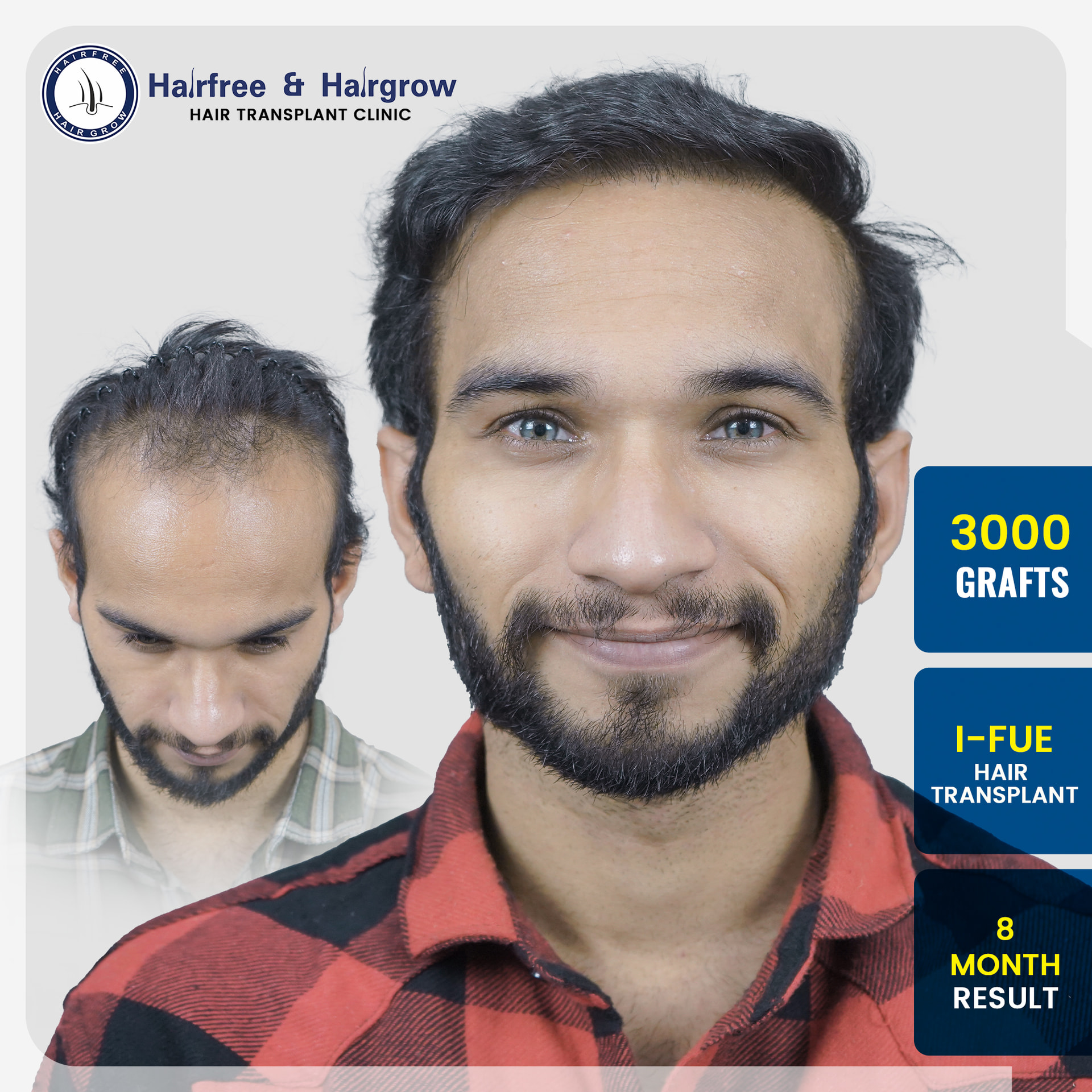
Ramesh Pangaonkar’s 3,000-Graft I-FUE Hair Transplant
Ramesh Pangaonkar underwent a 3,000-graft I-FUE hair transplant to address visible hair thinning and improve the appearance of scalp coverage.
The procedure involves individually extracting follicular grafts from the donor area and placing them into planned recipient areas. The number and distribution of grafts used during hair restoration depend on factors such as the extent of hair loss, donor-hair availability, existing native hair, recipient-area requirements, hair characteristics, and long-term restoration goals.
In Ramesh Pangaonkar’s documented case, 3,000 grafts were used as part of the planned I-FUE hair-restoration procedure.
Before Hair Transplant
The pre-treatment photograph shows noticeable hair thinning and reduced coverage across the upper scalp. The scalp is visibly more exposed through the existing hair, particularly toward the frontal and upper scalp region.
The treatment objective was to improve the visual appearance of scalp coverage while making appropriate use of the available donor hair.
Hair-transplant planning may take into account:
-
Existing hair density
-
Pattern and extent of hair loss
-
Donor-area characteristics
-
Hair thickness and texture
-
Recipient-area size
-
Available follicular grafts
-
Natural hair-growth direction
-
Existing native hair
-
Long-term restoration goals
Treatment Details
Ramesh Pangaonkar’s documented case included:
-
3,000 follicular grafts
-
Individual follicular graft extraction
-
Donor-area assessment
-
Recipient-area planning
-
Strategic graft distribution
-
Consideration of natural hair-growth direction
-
Focus on improving visible scalp coverage
-
Postoperative follow-up
The appropriate number of grafts varies from patient to patient. Graft requirements should be determined after evaluating the donor area, recipient area, existing hair, hair-loss pattern, and individual restoration requirements.
8-Month Hair Transplant Before & After Result
The provided before-and-after photographs show a visible difference in the appearance of hair coverage at approximately 8 months after the I-FUE hair transplant.
Compared with the pre-treatment photograph, the documented follow-up image shows:
-
Greater visible hair coverage
-
Reduced scalp visibility
-
A fuller-looking appearance across the treated region
-
Improved appearance of the upper and frontal scalp
-
Increased overall visual coverage compared with the pre-treatment photograph
At approximately eight months, transplanted hair may continue to develop and mature. Hair-growth timelines vary between individuals, so an 8-month photograph represents the patient’s appearance at that particular follow-up stage rather than a guaranteed outcome.
Before
The pre-treatment photograph shows visible thinning and reduced hair coverage across the upper scalp, with increased visibility of the scalp through the existing hair.
After Approximately 8 Months
The follow-up photograph shows visibly improved hair coverage and a fuller-looking appearance across the treated scalp compared with the pre-treatment photograph.
Individual hair-transplant outcomes can vary depending on donor-hair characteristics, graft quality, native hair, genetics, healing, postoperative care, treatment planning, and other individual factors.
What Is an I-FUE Hair Transplant?
I-FUE refers to an approach based on the individual extraction of follicular grafts from the donor area followed by transplantation into planned recipient areas.
Hair-transplant planning generally considers:
-
Donor-hair density
-
Hair caliber and characteristics
-
Available graft supply
-
Recipient-area size
-
Existing native hair
-
Graft distribution
-
Natural hair-growth direction
-
Healing response
-
Postoperative care
The appropriate technique and graft requirement should be determined through an individual assessment by a qualified hair-transplant professional.
Why Graft Planning Matters
Hair restoration is not determined only by the total number of grafts. The location and distribution of available grafts are also important considerations during treatment planning.
For patients with visible frontal or upper-scalp thinning, grafts may need to be distributed strategically across the areas requiring coverage while considering existing native hair and the natural direction of hair growth.
In Ramesh Pangaonkar’s documented case, 3,000 grafts were used with the I-FUE technique, and the approximately 8-month follow-up photograph shows improved visual scalp coverage compared with the pre-treatment image.
How to Evaluate Hair Transplant Options in Pune
Patients researching hair transplant clinics in Pune may consider several factors before selecting a treatment plan.
Important points to discuss during a consultation include:
-
Assessment of the hair-loss pattern
-
Donor-area evaluation
-
Individual graft planning
-
Recipient-area planning
-
Hairline and density considerations
-
Hair-transplant technique
-
Authentic before-and-after case documentation
-
Postoperative instructions
-
Follow-up process
-
Realistic expectations regarding hair growth
The appropriate treatment plan differs between individuals and depends on factors including hair-loss pattern, donor availability, hair characteristics, existing native hair, and long-term restoration objectives.
8-Month Outcome
Ramesh Pangaonkar’s case represents a documented 3,000-graft I-FUE hair transplant with an approximately 8-month before-and-after result.
The provided photographs show an improvement in the appearance of hair coverage compared with the pre-treatment photograph, with a fuller-looking appearance across the treated scalp region.
The case illustrates how donor-area assessment, graft planning, recipient-area planning, graft distribution, and postoperative follow-up can form part of an individualized hair-restoration process.
An 8-month photograph represents one stage of the hair-growth and maturation process. Hair growth and final appearance can vary considerably between individuals.
Frequently Asked Questions
How many grafts did Ramesh Pangaonkar receive?
Ramesh Pangaonkar’s documented hair-transplant case involved 3,000 grafts using the I-FUE technique.
What hair-transplant technique was used?
The documented procedure was an I-FUE hair transplant, involving individual follicular graft extraction and transplantation into planned recipient areas.
How long after the procedure was the result photographed?
The provided before-and-after photograph represents an approximately 8-month follow-up result.
What does the before photograph show?
The pre-treatment photograph shows visible hair thinning and reduced scalp coverage across the upper scalp, with increased scalp visibility through the existing hair.
What does the 8-month photograph show?
The follow-up photograph shows a visibly fuller-looking appearance and improved visual hair coverage compared with the pre-treatment photograph.
Does every patient need 3,000 grafts?
No. Graft requirements vary according to the individual’s hair-loss pattern, recipient-area size, donor density, hair characteristics, existing native hair, and restoration goals.
Is an 8-month hair transplant result the final result?
Not necessarily. Hair growth and maturation can continue beyond the documented follow-up period, and the timeline varies between individuals.
Can another patient expect the same result?
No. Hair-transplant outcomes vary between individuals. Donor-hair characteristics, graft quality, genetics, existing native hair, treatment planning, healing, and postoperative care can all influence the visible outcome.
Final Result
Ramesh Pangaonkar’s case represents a documented 3,000-graft I-FUE hair transplant with an approximately 8-month before-and-after result.
The provided photographs show an improvement in the appearance of scalp coverage compared with the pre-treatment photograph, including a fuller-looking appearance across the treated scalp region.
For individuals considering hair restoration, an individualized consultation can help assess donor availability, hair-loss pattern, graft requirements, treatment options, and realistic expectations.
Hairfree & Hairgrow Hair Transplant Clinic provides personalized consultations for individuals evaluating hair-restoration options.
Disclaimer
This case study represents one patient’s documented result at approximately 8 months after treatment. Hair-transplant results vary between individuals and are not guaranteed. Factors including donor-hair availability, hair characteristics, genetics, existing hair loss, graft characteristics, treatment planning, healing, and postoperative care may influence the final appearance.
The photograph represents the patient’s appearance at the documented follow-up period and should not be interpreted as a guarantee of the same outcome for another patient.
The information provided is for educational purposes and does not replace an individual medical consultation.